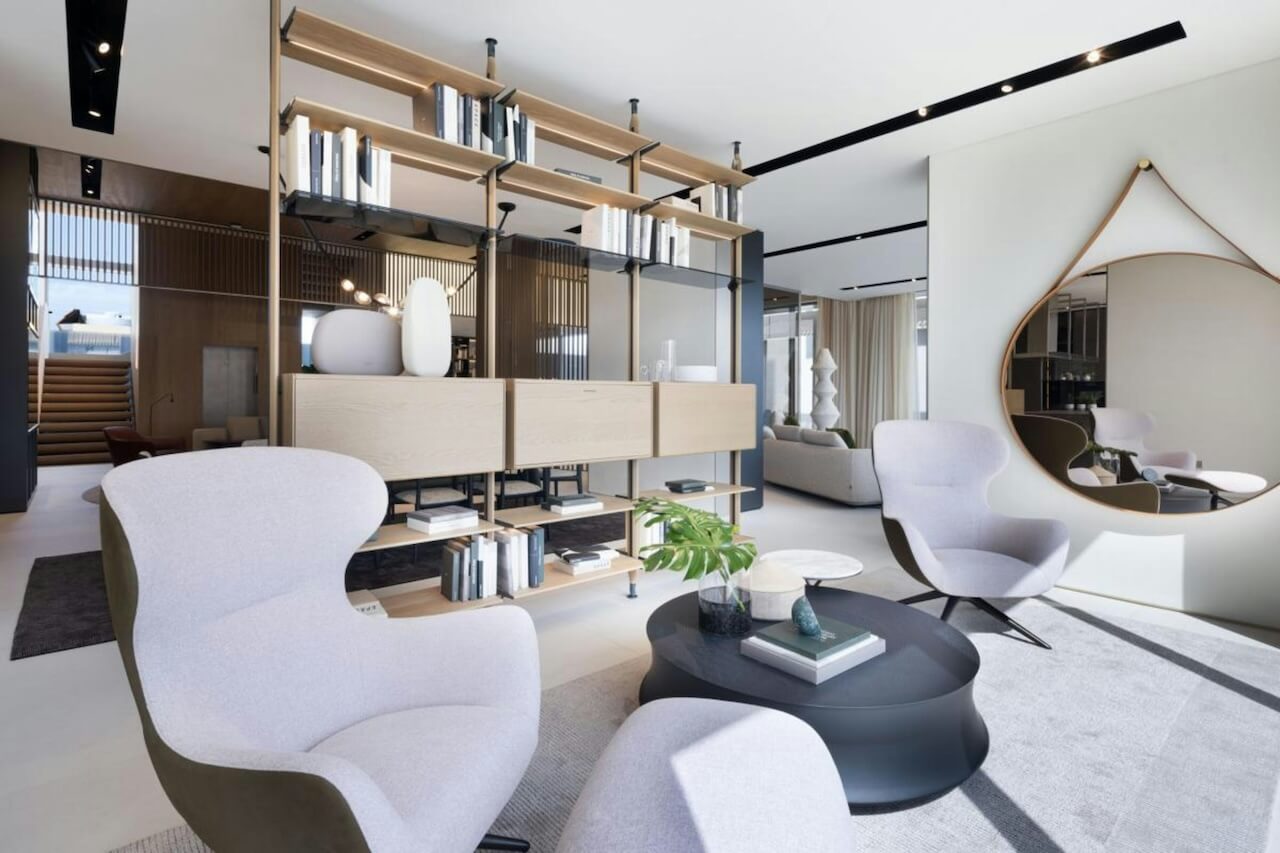
Luxury interior projects leave no room for error. A 1 mm mistake throws off the entire space and turns into a costly problem after delivery and installation. The risk grows when you source furniture from overseas OEM factories in Vietnam. The manufacturing landscape in Vietnam is highly fragmented. While one workshop might master solid wood joinery, they often struggle with complex upholstery or metal integration. You think you are working with one supplier. In reality, you are dealing with different skill levels and different outcomes. Often, quality control stops once the contract is signed. We spoke with the co-founders of Vietnamia.org, who created a production model built around ongoing factory supervision. Based right here in HCMC, the team handles the heavy lifting of factory audits and quality control so you stay clear of the daily production chaos. They’ve steered US and EU projects since 2016. By 2023, they launched Vietnamia.org to house everything in a single, water-tight digital oversight system.
Can Vietnam’s Factories Actually Live Up to the Caliber of Luxury Interiors?
“Vietnam has matured into a powerhouse for custom-built OEM furniture throughout the last ten years,” the Vietnamia team points out. “Buyers choose Vietnam for structural reasons. Cost matters, but so does technical capability. There is strong woodworking expertise, particularly in solid oak and acacia, and upholstery skills have improved significantly in export-focused factories.”
They point to trade policy as a decisive factor for European clients. “Trade policy has been a total game-changer for our European clients. Thanks to the EU–Vietnam Free Trade Agreement, most furniture exports have been hitting the EU at a zero-percent tariff since 2020. This isn’t just a minor perk, it’s what allows our buyers to keep landed costs low and maintain stable pricing even when the rest of the market is volatile.”
Production Risks in Vietnam When Custom Furniture Lacks On-Site Oversight
“To source custom furniture without visiting the factory, you must be prepared for delegating factory audits to an independent team,” Nikita Yakupov from Vietnamia.org explains. “Professional agents, for custom orders, are definitely the right place to start to avoid wasted time. Using a local team to negotiate with factories on your behalf and to monitor ongoing production allows you to significantly reduce risk. The result is saved time and reduced risk, along with structured quality control processes. It’s a model increasingly adopted by small and medium-sized US and EU furniture buyers.”
How Do You Find Suppliers Who Accept Fully Custom Furniture Designs?
Despite the fact that many suppliers online claim they accept custom designs, the uncomfortable truth is far from that. Many buyers searching for custom furniture manufacturers in Vietnam or OEM furniture suppliers quickly discover that not every factory is equipped for true bespoke production. “The real situation varies from industry to industry, but in general it is difficult to rely on information provided online due to a lack of constant updates,” Mikhail Prokudin says. “Instead of countless attempts in search of suppliers for fully custom designs, using a local sourcing agent is highly effective. Agents work locally with factories, filtering out suppliers early and staying present when production is underway.”
Example Project: Custom-Made Bed Production and Lead Time
Take a custom-made bed as an example. The workflow moves through a structured production sequence. “First, you choose from existing products such as upholstered beds made in Vietnam from our catalogue, or you send your sketch or idea,” they explain.
• 3D Modeling and Sample Development
“Once we get eyes on the drawings, our development team vets the dimensions and materials before cranking out a 3D model for approval. From there, the file is handed off to factory engineers who hammer out the first physical sample.” After sample approval, production starts with our factory partners, with a minimum order of one container.” The timeline depends on the design of the product. “It can take up to 1–2 months to execute everything and deliver your order.”
• Scaling to Full Interior Package
Managing multiple furniture categories under one production workflow is not easy. When asked about other furniture for luxury homes, the answer is direct. “Basically everything. OEM chairs, custom sofas, wardrobes, and more. Our production support in Vietnam reduces risk when ordering large interior furniture packages.”
The manufacturing base is fragmented. A factory strong in solid wood dining tables in Binh Duong may not handle high-end upholstery or metal detailing at the same standard. “Without a central team, a buyer ends up managing five different factory timelines and five different quality standards,” they explain.
• Quality Control Enforcement
Consistency remains central to the model. “The difference between ordering via Vietnamia.org rather than working with a factory directly is that you get an extra layer of protection, with independent eyes on the ground that are not affiliated with the factory,” they explain. “When you order a sample directly from a factory, you often end up receiving production quality that differs from the approved sample because there is no third-party enforcing sample standards during production. In many cases, the factory selects its strongest production unit for the sample run to win the contract, but moves production to a different line once the deposit is paid. Our role is to ensure the craftsmen who built your prototype are the same ones finishing your final container.” Buyers often ask whether this adds margin. “In practice, it does not add margin to the factory invoice. You are invoiced directly by the factory at the agreed production price.”
• Production Tracking with Vietnamia app
Once production runs abroad, you depend on reports instead of direct oversight. Vietnamia app gives you live updates from the factory floor. You track progress from start to finish. “After you place an order, we assign a dedicated manager to your project. We set you up on the Vietnamia dashboard so you see every update while we coordinate directly with the factory. You follow production in real time.”
Conclusion
Vietnam has shaken off its old stigma as a bottom-tier production hub. The bottom line? Pivoting from mass-market churn to bespoke luxury demands a completely different set of eyes on the ground. As the manufacturing landscape matures, the gap between “good enough” and “luxury standard” is usually found in the details that happen between the sample room and the shipping container. At first, the process feels easy, but communication problems start to appear when you least expect them and cost you significant money and time.